The housing market is fiercer than ever, and bidding wars have become the norm rather than the exception. If you’re serious about buying a home, you need a strategy that goes beyond just offering more money.
We at Kearns Mortgage Team have helped countless buyers navigate competitive offers and come out on top. This guide walks you through exactly how to win a bidding war on a house without sabotaging your financial future.
Why Bidding Wars Happen and What You’re Up Against
The Supply Crisis Fueling Competition
The housing market today operates under scarcity, not abundance. Home inventory remains critically low across most regions, with the National Association of REALTORS reporting persistent supply constraints that push multiple buyers toward the same properties. When three, five, or even ten buyers compete for a single home, prices climb fast. Homes in hot markets now sell in an average of 32 days, leaving almost no time for careful thought. Buyers frequently bid 10 to 15 percent above list price just to stay competitive. This isn’t speculation or hype-it’s the reality of competing in markets where demand far outpaces supply.

What Triggers Bidding Wars
A combination of factors creates the perfect storm. Low mortgage rates earlier in the cycle pulled millions of buyers into the market simultaneously. Job growth and remote work flexibility allowed people to relocate and expand their search geographically. Meanwhile, homeowners who locked in rates years ago have little incentive to sell and take on new mortgages at higher rates. The result is a supply-demand imbalance so severe that even moderately desirable homes attract double-digit offers within days of listing.
Which Properties Face the Fiercest Competition
Properties in good school districts, with updated systems, or in walkable neighborhoods become particularly hot. Sellers know they hold the power, and they use it. They’ll accept the highest bid, the strongest financing terms, or the offer with the fewest contingencies. Your job isn’t to match one competitor-it’s to stand out among many while protecting yourself financially. That requires understanding exactly what sellers want and delivering it faster and more convincingly than everyone else bidding. The stakes feel high because they are, and your next move determines whether you advance or fall behind in this competitive race.
How to Build an Offer Sellers Can’t Ignore
Prove Your Financial Strength Before You Bid
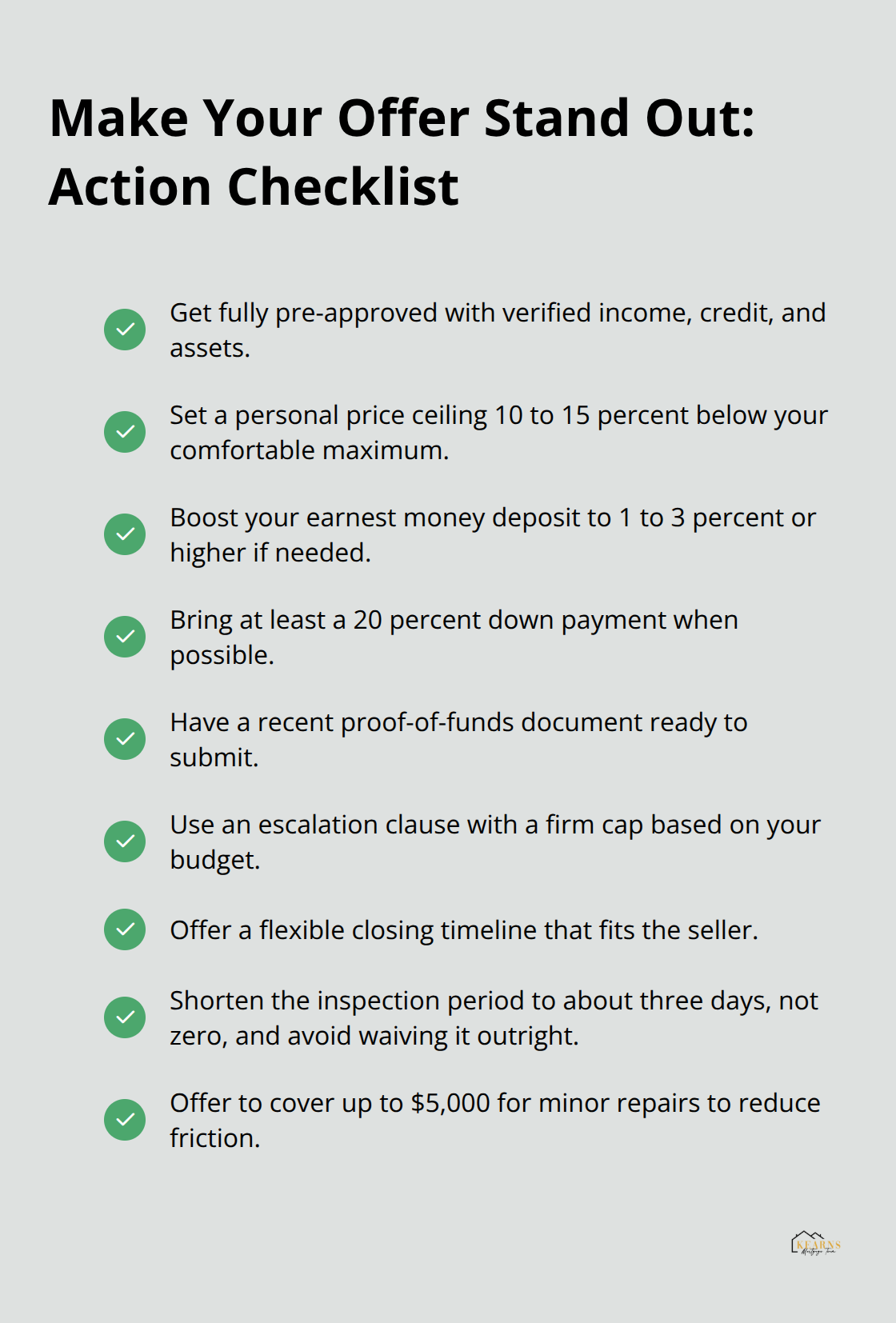
Getting pre-approved isn’t optional anymore-it’s your entry ticket to competitive markets. Sellers receive multiple offers simultaneously and immediately discard any bid without proof of financing. A pre-approval letter from your lender shows you’ve already verified your income, credit, and assets. This matters far more than a generic pre-qualification. The difference is straightforward: pre-qualification is a rough estimate based on what you tell a lender, while pre-approval involves actual verification of your financial documents. Without it, you’re already behind.
Set a personal ceiling 10 to 15 percent below the maximum amount you can comfortably afford. This prevents you from chasing emotions instead of logic when bidding heats up. Your earnest money deposit also signals seriousness-most buyers put down 1 to 3 percent of the purchase price, but in competitive markets, deposits can be significantly higher. A larger deposit shows the seller you’re financially committed and less likely to back out. Pair your pre-approval with a solid down payment of 20 percent or more if possible, and have your proof of funds document ready before you submit any offer.
Sellers favor conventional financing with strong down payments because it reduces their risk and speeds closing.
Price Strategically With Escalation Clauses
Stop anchoring your offer to the list price. Instead, research comparable sales in the neighborhood and price your initial bid at market rate or slightly above it, then use an escalation clause to stay competitive without overpaying. An escalation clause automatically raises your offer if another buyer submits a higher bid, up to a maximum price you set. For example, you might offer $350,000 with a clause that escalates $5,000 above any competing offer, capped at $375,000. This protects you from bidding wars that spiral out of control while keeping you in the running.
Set that cap intentionally-not emotionally. Your maximum price should reflect your budget and financial reality, not your desire to win at any cost. This single decision separates buyers who walk away satisfied from those who regret their purchase for years.
Remove Friction Through Flexibility and Transparency
Beyond price, sellers care deeply about certainty and speed. Offer a flexible closing timeline that matches the seller’s needs, whether they need 30 days or 60 days. Waive the appraisal contingency only if you’re prepared to cover the gap with cash; don’t waive the inspection contingency entirely, but consider shortening it to three days instead of the standard seven to ten. Inspection waivers are risky and signal desperation.
Instead, conduct a thorough walkthrough yourself and check the foundation, HVAC, plumbing, electrical systems, appliances, gutters, doors, and security systems. Offer to cover anticipated repair costs-say $5,000 for minor fixes-rather than demanding the seller handle everything. This removes friction from negotiation and shows you’ve thought through the home’s condition realistically.
Connect on a Human Level
Include a personal letter explaining what draws you to the home and why you’re committed to making it work. Sellers are human, and genuine connection can tip the scales when two offers are nearly identical in price and terms. A handwritten note about specific features you love or your family’s vision for the space creates emotional resonance that a standard offer form cannot match.
What separates a winning offer from one that gets rejected often comes down to how well you’ve anticipated the seller’s concerns and addressed them before they even ask.
Common Mistakes Buyers Make in Bidding Wars
The Inspection Contingency Trap
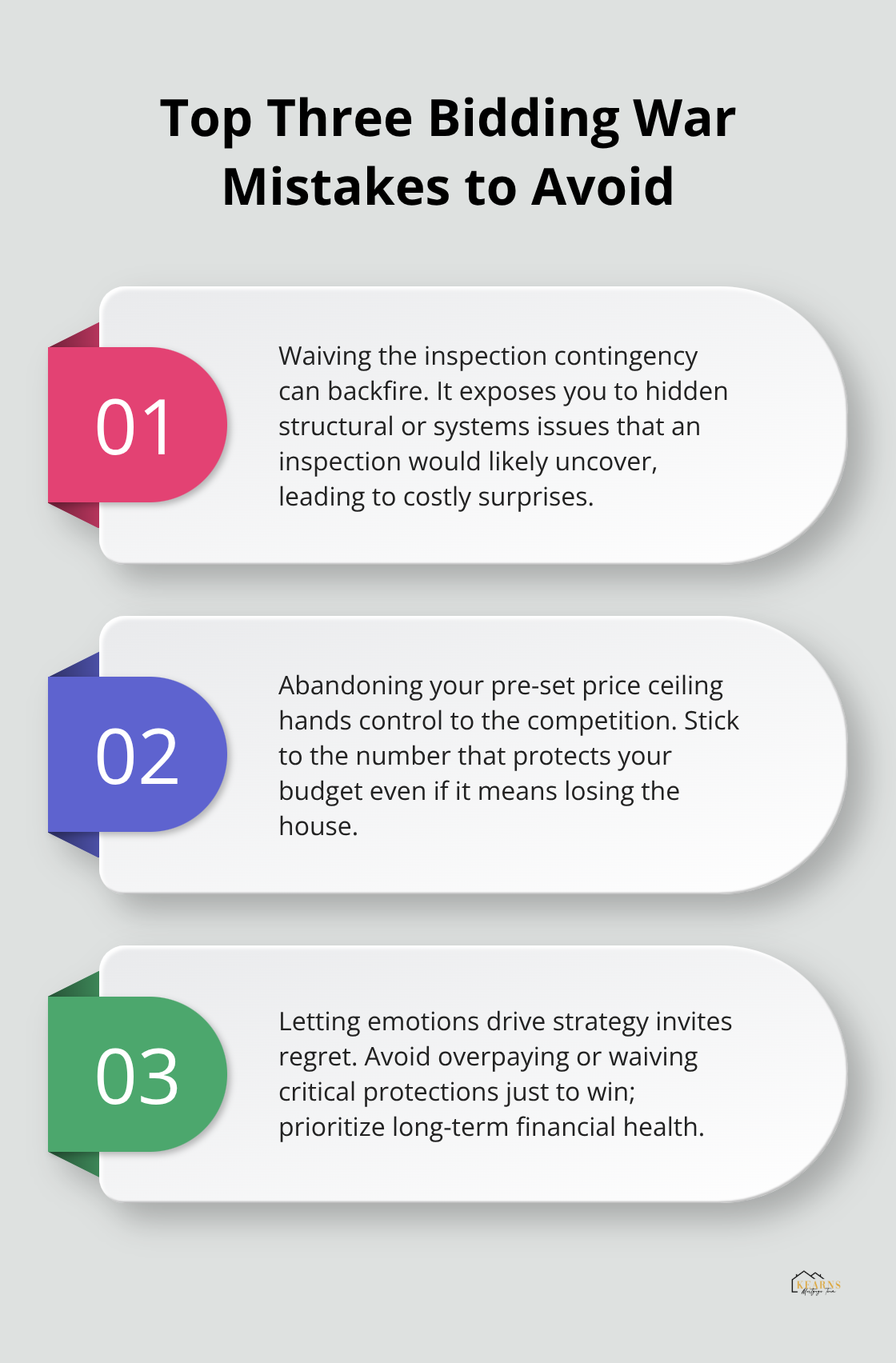
The first mistake that costs buyers thousands happens when they waive their inspection contingency entirely to look more attractive to sellers. This is a decision that leads to hidden repairs and structural problems that inspections would have caught. Homes with deferred maintenance frequently hide issues in foundations, HVAC systems, and plumbing that surface only after you’ve signed the papers. Shorten your inspection period to three days instead of removing it completely, then conduct a personal walkthrough checking foundations, electrical systems, and appliances yourself. You’re not trying to impress the seller with recklessness; you’re trying to win with intelligence. An inspection contingency protects you from catastrophic financial surprises, and no bidding war victory is worth that protection.
Abandoning Your Price Ceiling
The second trap is abandoning your maximum price ceiling mid-bidding. You set a number before emotions took over for a reason-it reflects what you can actually afford without stretching your finances dangerously thin. When you exceed that number because another buyer pushed you, you’ve surrendered control to your competition. Many buyers experience buyer’s remorse within months of purchase, especially when mortgage rates rise or unexpected repairs surface. Hold your ceiling firm, and if you lose the bidding war, that’s the correct outcome. Walking away from an overpriced property protects your long-term financial health far more than winning a single house at any cost.
Emotional Decisions Masquerading as Strategy
The third trap is emotional decision-making disguised as strategic thinking. You might convince yourself that waiving the appraisal contingency is worth the risk because you love the kitchen, or that offering $30,000 above your maximum is justified because the neighborhood is perfect. These aren’t strategic moves-they’re emotional reactions that lead to financial regret. Sellers appreciate competitive offers, but they don’t respect desperation. If your offer loses, it means another buyer was willing to take more risk or pay more money, and that’s their choice to make. Your responsibility is to yourself and your financial future, not to winning at all costs.
The Power of Walking Away
The strongest position you can take in a bidding war is the willingness to walk away. When sellers sense you’re calm, financially stable, and won’t be manipulated by competition, your offer becomes more credible and appealing. You’ve already learned how to prove your financial strength and structure attractive terms-now add one more element to that winning formula: the discipline to reject deals that don’t align with your budget and financial reality. This mindset shift transforms how sellers perceive your offer and increases your chances of success in future opportunities.
Final Thoughts
Winning a bidding war on a house requires discipline, not desperation. You’ve learned how to structure offers that appeal to sellers, prove your financial strength, and protect yourself from costly mistakes. The real test arrives when emotions run high and you’re tempted to abandon the strategy that got you this far.
The hardest part of how to win a bidding war on a house isn’t making a strong offer-it’s knowing when to walk away. Every property you lose to another buyer isn’t a failure; it’s a decision to protect your financial future. Homes will continue to come on the market, and your budget won’t change just because one property sold to someone else.
Work with a knowledgeable real estate agent who understands your local market and can guide your offer strategy. Contact Kearns Mortgage Team for a free consultation, and let’s build your winning strategy together with personalized mortgage solutions and competitive rates.