Florida’s real estate market is booming, and investors are paying attention. The state added over 1 million residents between 2020 and 2023, creating strong demand across multiple markets.
We at Kearns Mortgage Team see firsthand how the best places to invest in real estate in Florida vary depending on your goals and timeline. Whether you’re looking for quick profits or steady rental income, understanding which markets and strategies work best makes all the difference.
Which Florida Markets Deliver the Strongest Returns for Investors
South Florida’s International Buyer Premium
South Florida attracts international capital at an unprecedented scale. International purchases jumped 51% in transaction count from August 2024 to July 2025, with dollar volume reaching $10.4 billion. Canada led with $1.9 billion in purchases, up 52% year-over-year, while Colombia and Brazil also showed strong demand.
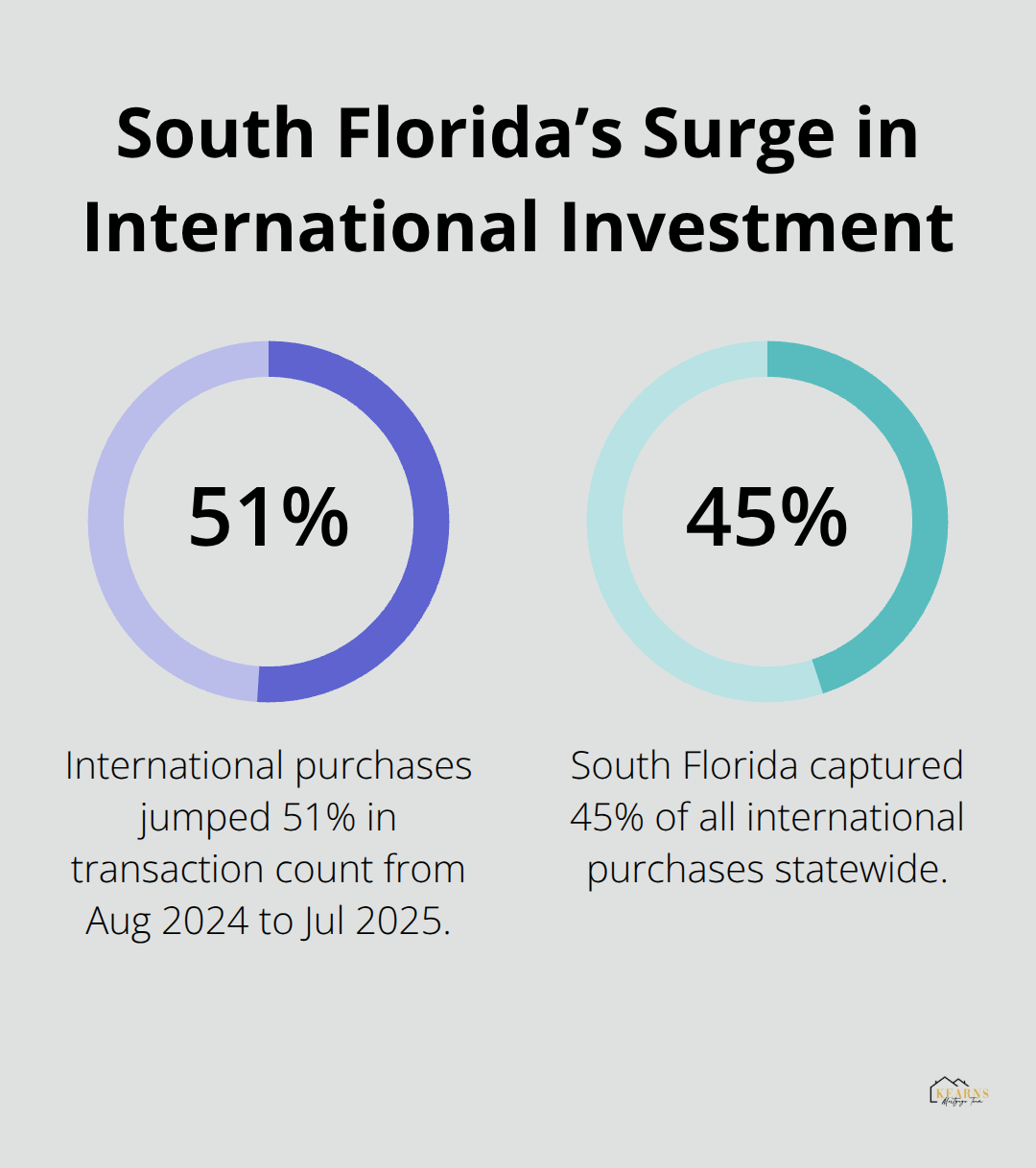
South Florida captured 45% of all international purchases statewide, making it the primary hotspot for foreign investment. The median sale price for international buyers across Florida was $442,000, about 12.5% above the statewide median, with the largest concentration falling in the $250k–$500k range. This international demand creates both appreciation potential and rental income opportunities for investors targeting high-income neighborhoods.
Premium Rental Markets in South Florida
West Palm Beach ranks highest for long-term rentals with a median price of $947,714, monthly rents averaging $3,386, and a 3.66% cash-on-cash return according to Mashvisor data. Coral Gables commands even higher rents at $2,997 monthly with a median listing price near $1.9 million, attracting affluent renters willing to pay premium rates. These markets reward investors who position properties for high-income tenants and understand the luxury rental segment.
Tampa Bay and Orlando: Domestic Growth Engines
Tampa Bay and Orlando offer different advantages centered on domestic migration and job growth. Tampa ranks second for long-term rentals with 2,464 listings, a median price of $766,987, and monthly rents averaging $3,107 with a 3.50% cash-on-cash return per Mashvisor. The region benefits from consistent population growth and diversified employment, drawing renters across income levels. Orlando attracted 36% of Florida’s international purchases, with Latin American and Caribbean buyers dominating that market segment. These metros combine strong rental fundamentals with appreciation catalysts that appeal to both domestic and international investors.
Secondary Markets: Affordability Meets Growth
Smaller Florida markets present compelling opportunities for investors prioritizing affordability and growth potential. Lakeland projected job growth of 42.5% over the next decade sits between Tampa and Orlando with a median home price of $322,000. Winter Haven, also near Lakeland, shows a median price of $295,000 with projected 44.5% job growth and annual population growth of 3.78%. Port Charlotte presents another option with a median price of $320,000, unemployment at 5.0%, and projected job growth of 38.9%. Lower acquisition costs in these markets mean higher cash-on-cash returns on the same monthly rental income compared to Miami-Dade properties. For investors focused on long-term appreciation rather than immediate cash flow, these emerging markets deliver stronger growth trajectories than saturated coastal areas, positioning you to capitalize on population spillover and employment expansion.
What Really Matters When Choosing Your Florida Investment Property
Local Market Conditions Trump Broad Strategies
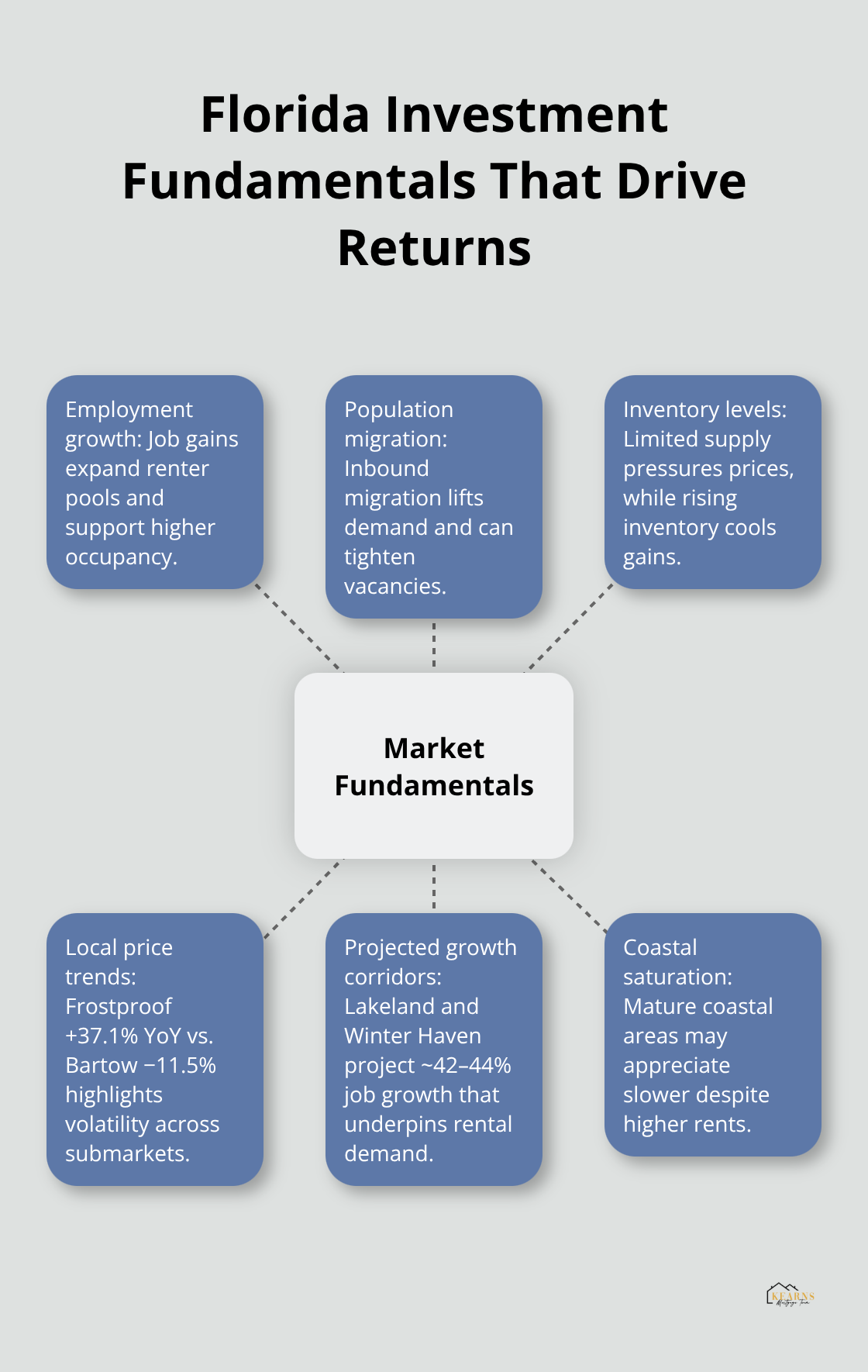
Florida’s property market rewards investors who understand local conditions rather than chase headlines. Price trends vary dramatically across the state-Frostproof saw prices jump 37.1% year-over-year while Bartow declined 11.5%, according to ATTOM data from February 2025. These swings reveal that blanket strategies fail in Florida. You need granular knowledge of your target market’s fundamentals: employment growth, population migration patterns, and inventory levels. Markets like Lakeland and Winter Haven project job growth around 42–44% over the next decade, creating sustained rental demand that justifies acquisition costs. Conversely, saturated coastal markets may show slower appreciation despite higher rents.
Selecting the Right Property Type for Your Goals
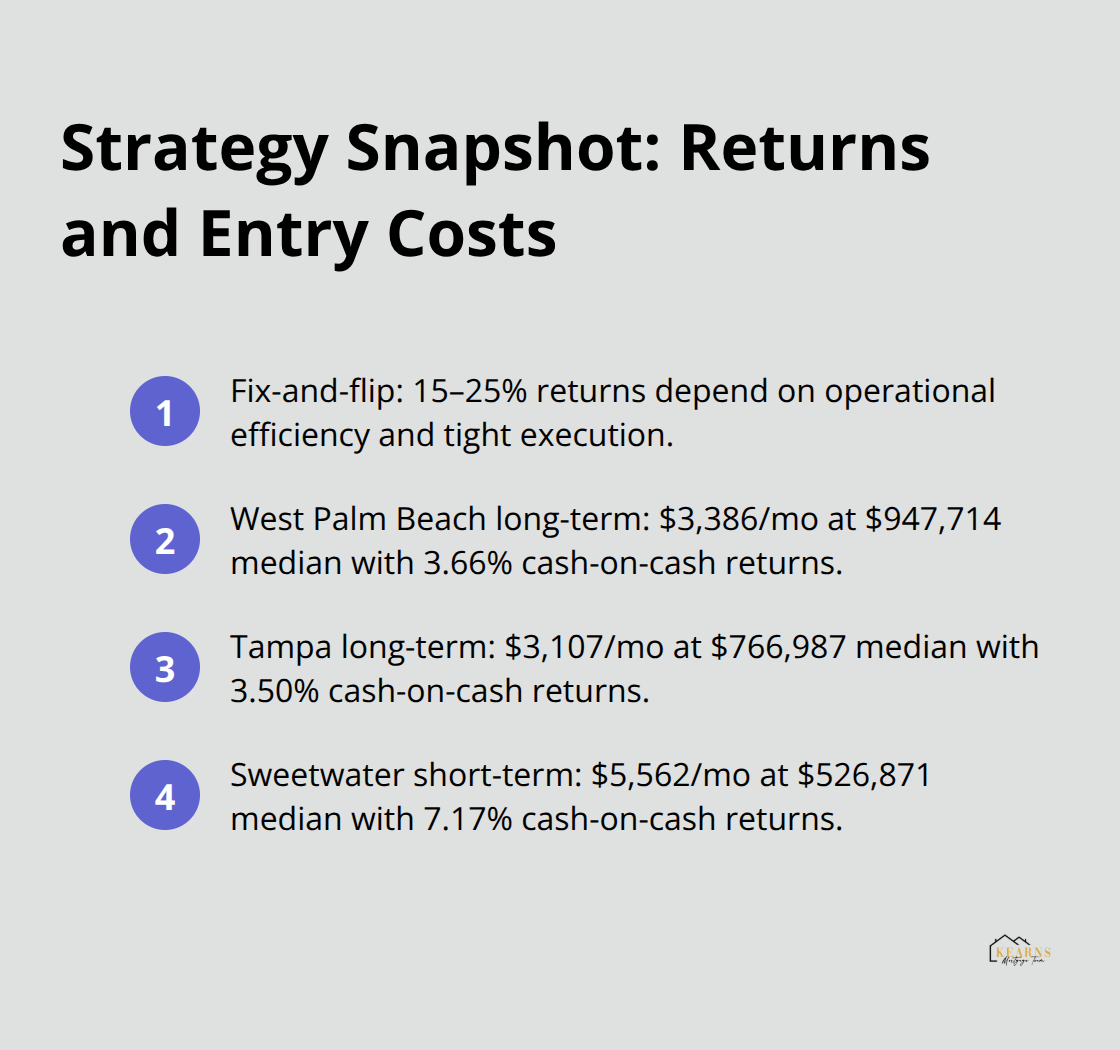
Property type selection directly impacts returns. West Palm Beach long-term rentals generate 3.66% cash-on-cash returns at $947,714 median prices with $3,386 monthly rents per Mashvisor, while short-term rentals in Sweetwater deliver 7.17% cash-on-cash returns at lower median prices of $526,871. The choice between long-term and short-term depends on your capital availability, management tolerance, and local regulations. Short-term rentals require active oversight but compress your payback timeline, while long-term rentals demand less hands-on work but tie capital longer.
Hidden Costs That Erode Your Returns
Insurance costs and climate risk represent the hidden tax on Florida investments that many overlook. Hurricane exposure, flood insurance requirements, and rising homeowners insurance premiums can erode 15–25% of projected cash flow in coastal properties. For an investor in the 24% tax bracket, the after-tax cost of flood insurance represents meaningful impact on cash flow. Secondary markets like Ocala, Lakeland, and Winter Haven sit inland, reducing insurance burden and improving net returns compared to Miami-Dade or coastal Tampa properties. Property tax rates also vary significantly-DeBary charges 0.79% while Port Charlotte charges 1.34%, a difference that compounds substantially over holding periods. Calculate total ownership costs including taxes, insurance, and maintenance before comparing cap rates across markets; nominal rental yields mislead when insurance and taxes consume disproportionate shares of income.
These market fundamentals shape which Florida properties actually perform well for your portfolio. Understanding them positions you to evaluate specific investment opportunities with confidence and clarity.
How to Structure Your Florida Investment Strategy
Fix-and-Flip Operations in Emerging Markets
Fix-and-flip deals work best in secondary markets like Lakeland, Winter Haven, and Port Charlotte where median prices range from $295,000 to $322,000 and projected job growth sits around 40–44% over the next decade. Lower acquisition costs mean tighter margins demand operational efficiency-your contractor relationships, permitting timeline, and exit strategy determine whether you capture 15–25% returns or break even. These emerging markets offer inventory that moves faster than saturated coastal areas; Port Charlotte averaged 119 days on market while West Palm Beach stretched to 115 days, giving you more buying opportunities in smaller metros. Fix-and-flip success hinges on accurate rehab budgeting and understanding local buyer preferences.
Investors pursuing quick exits in Winter Haven or Lakeland should focus on properties that attract the young professional renters and families driving migration into these areas, not luxury finishes that overprice the market.
Long-Term Rentals for Predictable Cash Flow
Long-term rentals deliver more predictable cash flow but require honest evaluation of your target market’s rental fundamentals. West Palm Beach generates $3,386 monthly rents at $947,714 median prices with 3.66% cash-on-cash returns according to Mashvisor, while Tampa delivers $3,107 monthly at $766,987 median prices with 3.50% returns. The math favors Tampa’s lower entry cost if your goal is maximizing absolute cash flow across a diversified portfolio. Conversely, if you have substantial capital, West Palm Beach’s higher rents and international buyer premium justify the acquisition premium. Long-term rentals demand less hands-on work than short-term operations, though they tie your capital longer before you realize full returns.
Short-Term Rentals and Active Management
Short-term rentals present a different calculus entirely-Sweetwater shows 7.17% cash-on-cash returns at $526,871 median prices with $5,562 monthly rents according to Mashvisor, but this requires active management, handling seasonal fluctuations, and navigating local short-term rental regulations that vary dramatically across Florida municipalities. The higher returns compress your payback timeline compared to long-term leases, yet the operational burden increases substantially. You must handle tenant turnover, maintenance coordination, and occupancy optimization throughout the year. Markets with strong tourism infrastructure (such as coastal areas and theme park regions) support short-term rental viability more reliably than inland secondary markets.
Commercial Real Estate and Stabilized Assets
Commercial real estate and mixed-use development demand institutional capital and expertise most individual investors lack. Q1 2025 commercial real estate investment trends show investors deployed $92.5 billion into major asset classes, a 17% increase from a year ago, yet this masks a critical reality-single-asset transactions increased while total trade count declined, meaning smaller investors should focus on acquiring stabilized assets rather than assembling development pipelines. For most investors, stabilized multifamily properties in Orlando or Tampa metros align with the strong rental demand trends dominating 2025 while avoiding the complexity and capital requirements of ground-up development. Understanding mortgage options and current rates helps you structure financing that matches your investment timeline and cash flow projections.
Final Thoughts
Florida’s best places to invest in real estate depend on matching your capital, timeline, and risk tolerance to the right market. South Florida captures international demand and premium rental rates, making it ideal for investors with substantial capital who seek appreciation and high monthly income. Tampa and Orlando balance strong rental fundamentals with domestic migration tailwinds, while secondary markets like Lakeland, Winter Haven, and Port Charlotte deliver lower acquisition costs and faster job growth that reward investors who prioritize cash-on-cash returns.
Success in Florida real estate hinges on three factors that separate winners from those who struggle. First, understand your specific market’s fundamentals rather than chase statewide trends-price movements vary wildly across regions, and local employment growth, population migration, and inventory levels determine actual returns. Second, calculate total ownership costs including property taxes, insurance, and maintenance before comparing cap rates; hidden expenses erode cash flow faster than most investors anticipate. Third, match your property type and strategy to your operational capacity-short-term rentals compress returns but demand active management, while long-term rentals require patience but deliver predictable income.
Your next step is securing financing that aligns with your investment timeline and cash flow projections. We at Kearns Mortgage Team offer personalized mortgage solutions including Conventional, VA, FHA, USDA, and Non-QM options tailored to investment properties, and our team provides free consultations to help you structure financing that maximizes your returns. Contact Kearns Mortgage Team to explore loan options and start your Florida investment journey.
Which Florida market aligns best with your investment goals and available capital?